

Sell Land Fast in Michigan for Cash
Fair written land offers for Michigan owners with no listing commission, no cleanup requirement, and title-company closing.
- Cash offer review within 24 hours
- Any Michigan land, any condition, as-is
- Close in as little as 2 weeks
We are direct cash land buyers serving property owners across Michigan. Whether your land is wooded acreage in Northern Michigan, a vacant lot in a small town, inherited property in the Upper Peninsula, or rural land with access or title questions, we make it simple to compare a written offer without realtor fees, commissions, or public showings.
Sell Your Michigan Land for Cash: No Fees, No Agents
- Fair written offer for your Michigan land, no public listing required
- Zero commissions or agent fees
- Clear closing terms before you decide
- We review vacant lots, wooded acreage, rural parcels, and inherited land
- Close in as little as 2 weeks when title is ready
- No financing contingency or retail-buyer showing cycle
How to Sell Land in Michigan: Our Simple 3-Step Process
- Tell Us About Your Michigan Property. Share the county, acreage, parcel number, access notes, and any ownership details you know. No obligation, no pressure.
- Receive Your Written Offer. We review county records, access, taxes, terrain, utilities, title status, and recent land-sale context before sending written terms.
- Close and Get Paid. If the offer works, a title company coordinates the documents and payment. Closing can move quickly when title is ready.
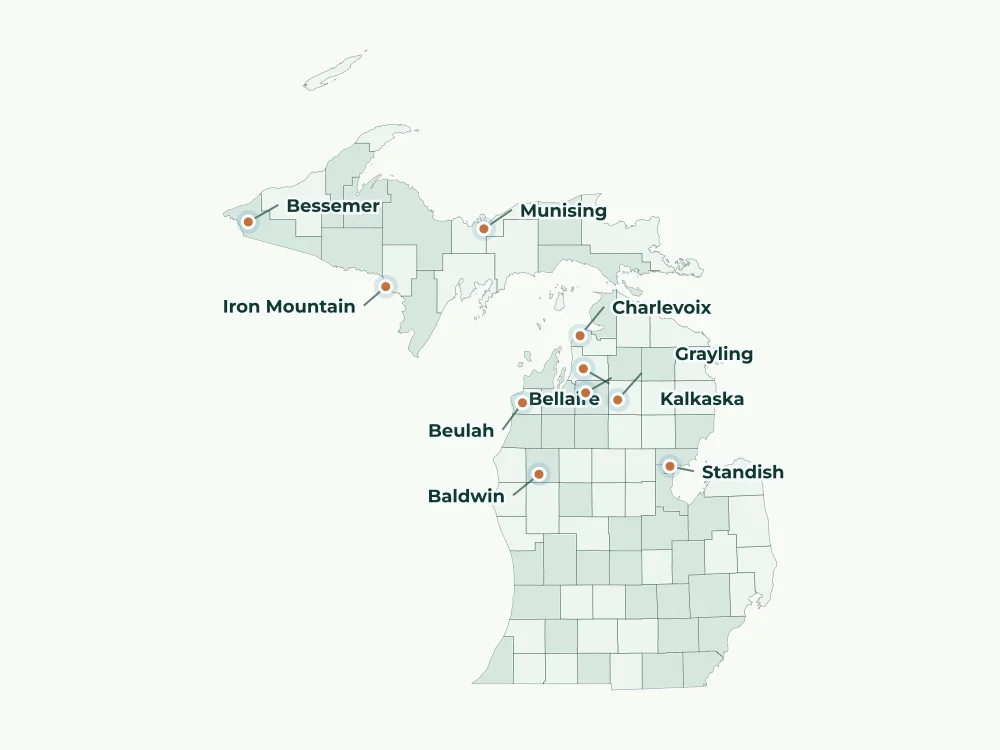
We Buy Land Across All of Michigan
From the Upper Peninsula and Northern Michigan to hillsdale-area acreage and rural Lower Peninsula parcels, we review land across all 83 Michigan counties.
Ready to Get a Cash Offer for Your Michigan Land?
No fees. No commissions. No repairs required. We close through a title company on a timeline that fits the parcel.
Get My Free Cash Offer →Selling Michigan Land: Us vs. a Traditional Realtor
| Sell Michigan Land | Traditional Realtor | |
|---|---|---|
| Fair written cash offer | ✓ | ✗ |
| Zero commissions or agent fees | ✓ | ✗ |
| Review land as-is | ✓ | ✗ |
| No public showings or MLS listing | ✓ | ✗ |
| Title-company closing | ✓ | Varies |
| Timeline can move when title is ready | ✓ | Often months |
What Michigan Landowners Say

The parcel had old access questions and I did not want a public listing. Sell Michigan Land reviewed the county record first and gave me written steps I could compare.
$58,400 cash - 17 days to close

My wooded acreage needed a buyer who understood road access and title timing. The offer was clear, private, and stayed tied to the facts.
$81,200 cash - 20 days to close

I wanted to sell the lot without cleaning it up or waiting months. The written offer explained closing costs and the timeline before I decided.
$44,600 cash - 14 days to close
Get Your Free Cash Offer. No Obligation
Tell us about your land and we will respond with a written offer review. No fees, no commissions, no pressure.
Michigan Counties We Serve - All 83 Counties
We review land throughout Michigan. Counties with dedicated local pages are linked; the remaining counties are listed so Michigan owners can confirm we cover their area.
Michigan Land Sale Details to Review
This optional guide explains the parcel records, access notes, title questions, and closing details to review before choosing how to sell your Michigan land.
Sell Land Fast in Michigan With a Written Cash Offer
If you need to sell land in Michigan, compare the actual parcel record before you choose a buyer. Michigan owners may describe the same goal as sell land fast, sell land for cash, sell your land quickly, sell land by owner, or compare land for cash with a traditional listing. The useful next step is the same: review the deed, parcel number, legal description, property tax bill, access notes, and title-company closing path.
Cash Land Buyer Questions Before You Sell Your Land
A cash land buyer should explain whether they can buy vacant land, buy Michigan acreage directly, cover closing costs, and pay cash without lender delays. Ask how the cash offer for your land is calculated, what due diligence is required, whether the buyer can handle inherited land or unwanted land, and when the cash sale can close. A fast land sale should still come with written terms.
Vacant Land in Michigan, Rural Acreage, and Property Records
Michigan property can include vacant land, wooded acreage, agricultural land, rural parcels, inherited property, and land that is hard to sell because of access, taxes, seasonal roads, wetlands, utilities, or title questions. A Michigan land buyer should compare county records, road frontage, zoning, terrain, parcel boundaries, and the local land market before asking you to decide.
Michigan Parcel Review Starts With Local Facts
Michigan owners do not need a generic price-per-acre answer. A useful review starts with the assessor parcel record, acreage, legal description, and the facts that affect a buyer’s ability to close. In this area, shoreline buffer, utility distance, and soil suitability can influence both demand and the closing timeline.
Access, Ownership, and Timing
Before accepting an offer, compare access, tax status, deed names, and any issue such as county tax record or heirship paperwork. A title company can explain what needs to be resolved for transfer, while the seller can decide whether a direct sale, public listing, or holding the parcel is the better fit.
A Practical Way to Compare Offers
Written terms should state the price, due-diligence period, closing costs, assignment rights, and expected closing date. For Michigan land, the clearest choice is usually the one that accounts for wetland notation before signing rather than changing the discussion during closing week.
Start with the Michigan parcel record
A useful Michigan land review starts with the county parcel number, legal description, acreage, and current tax record. Those documents identify the tract more reliably than a mailing address, an old family description, or a pin on a map. Add the most recent deed, any survey or plat, and dated photographs of the entrance, road, corners, structures, or visible water. If the property is inherited, include the estate authority or probate information that shows who can sign. A complete file helps an owner compare choices without assuming that a nearby parcel has the same access, restrictions, or usable ground.
Michigan has very different property settings, from Upper Peninsula forest acreage and seasonal routes to rural Lower Peninsula fields, hillsdale-area lots, and city-edge parcels. The setting can frame useful questions, but it does not answer them. A shoreline reference does not prove frontage, a visible lane does not prove an easement, and a tax map is not a survey. Ask the title company, county office, surveyor, attorney, tax professional, or land-use professional for questions that require their expertise.
Prepare the facts a buyer will need
Before requesting a cash offer, note the practical conditions of the land in plain language. Describe how the parcel is reached, whether the approach is public or private to your knowledge, and whether there are gates, bridges, culverts, seasonal conditions, or shared drives. Record known utility information, wells, septic systems, leases, timber agreements, mineral language, wet areas, or neighbor use without making conclusions beyond the documents. The goal is not to turn the seller into an expert. It is to give every party a consistent starting point for a Michigan land sale.
For vacant land, the details that change a decision are often ordinary ones: current owner names, property-tax status, a clear legal description, access records, and title requirements. Gathering those items early can expose a missing signature, an old deed name, an unpaid balance, or a question that needs more review. It can also make a conversation with a land buyer more specific than a price-per-acre estimate pulled from a broad area.
Compare sale options using written terms
There is no single best way to sell land in Michigan. Some owners choose public marketing and a traditional listing. Others consider selling land by owner. A direct purchase can be another option for someone who prefers a private review or does not want listing commissions. Compare the entire path, not only the stated price. Written terms should identify the purchase price, earnest money if any, inspection or due-diligence period, closing costs, title work, assignment language, and expected closing date.
A fair cash offer is one that can be read alongside the property facts and the conditions in the agreement. Do not treat an initial conversation as a commitment, and do not assume that a cash buyer will resolve every title, access, tax, or land-use question. Ask what information the buyer relied on, what conditions remain, and who will handle the closing. A title-company closing gives the parties a place to coordinate documents and payment, while the seller remains free to decide whether the offer fits.
Inherited and remote Michigan land
Inherited land can require extra organization before any sale. Start with the deed, estate documents, current tax bill, parcel record, and the names of every person who may need to approve a transfer. If family members live in different places, keep one shared file of records and make a list of questions before discussing price. Probate, tax treatment, title, and signing requirements can be fact-specific, so use the appropriate Michigan professionals rather than relying on general online guidance.
Remote ownership brings a different set of practical tasks. Current photographs, a map, road notes, and a contact for someone who can describe the entrance can help the owner understand the parcel without a rushed trip. Those materials are useful for a listing, a private sale, or a decision to keep the land. They do not replace a survey, legal advice, or a title search, but they can make the next conversation more grounded.
Questions worth answering before closing
Whether you sell your Michigan land for cash or use another route, take time to understand what is being transferred. Confirm the owner names, the parcel identifier, known easements, the tax status, and the proposed closing date. Read the agreement for contingencies and assignment rights. If an issue is unclear, ask for an explanation in writing or seek independent advice. The clearest transaction is usually the one where the parties identify open questions early instead of treating them as last-minute surprises.
A straightforward file may close in as little as two weeks when title, ownership, and documents are ready. That is a possible timeline, not a promise. The condition of the parcel, the number of owners, title findings, tax balances, and the closing professional's requirements can all affect timing. Give yourself room to review the documents and choose the option that matches your priorities.
Use local context without making assumptions
Michigan land can be affected by road maintenance, wetlands, shoreline rules, wooded terrain, agricultural use, and seasonal access. Those subjects should lead to focused questions about the exact parcel, not generic claims about value. Keep notes on what you have observed, label photographs with dates and locations, and separate those observations from recorded rights. That distinction helps a buyer, a title company, and the seller communicate about the same property.
If you need to sell unwanted land, a prepared file can make the first review more useful. Share the county, acreage, parcel number, address or map pin, ownership notes, and any access or title questions. Then compare a written offer for your land with your other options on your own schedule. The choice remains yours, and the property facts should drive it.
Keep the written record with you throughout the process. A clear Michigan parcel file can help you ask better questions, compare a direct cash offer with a listing, and decide without rushing. It also gives the closing professional a practical starting point if you choose to move forward.
Questions About Selling Land in Michigan
Can I sell land in Michigan without visiting it?
Often yes. A parcel number, county records, maps, photos, and title information can support an initial review remotely.
What if the Michigan parcel has tax or title questions?
Those facts should be reviewed before final terms. A title company can identify the documents needed for a clean transfer.
Do I need an agent to sell my land?
No. Some sellers choose a listing, while others compare a direct offer when they want fewer showings and no listing commission.
How long can a land closing take?
It depends on title, ownership, and document readiness. A straightforward file can close in as little as two weeks.
More Michigan Land Sale Questions to Consider
Review extra notes on cash offers, title questions, access details, and due diligence before deciding which sale option fits your land.
Common Michigan Land Sale Terms, Translated Into Documents
Owners use many phrases when they are ready to compare options: land fast for cash, land by owner in Michigan, sell your land in Michigan, sell Michigan land, sell my land fast, Michigan land for cash, sell your land fast, cash for land, buy land Michigan, cash for your land, no-obligation cash offer, land for cash in Michigan, cash in Michigan, direct land buyers, help you sell, and sell your land for cash. Those searches should lead back to the same documents: deed, tax bill, parcel record, access notes, purchase agreement, and closing statement.
Fast Land Sale Does Not Mean Skipping Due Diligence
If you want to sell your property quickly, the buyer still needs to understand access, utilities, back taxes, ownership, liens, zoning, wetlands, and title exceptions. A land buying company that can pay cash should be able to explain the offer, the closing costs, the title company process, and the timeline before asking you to sign. That is true for vacant land in Michigan, rural acreage, inherited land, unwanted land, and property across Michigan that is difficult to list through a traditional realtor. Direct cash buyers can help you sell your land for cash when you want to sell land fast, avoid buyer financing, and compare cash for your land against a public listing.
Other Ways Michigan Owners Describe Their Sale Goals
Michigan owners may describe their goal as selling land fast, selling unwanted land, selling inherited property, comparing a cash offer, selling property without a realtor, or finding a direct land buyer. We connect those goals back to parcel-specific records, title, taxes, access, and closing documents. We treat those phrases as a starting point for a parcel-specific review, not as a replacement for title, tax, access, and closing documents.
Michigan Land Selling Guides
Practical guides for Michigan landowners comparing a cash offer, inherited land sale, title questions, taxes, and selling without a realtor.